

feasting for Lent
Reflection for the Saturday after Ash Wednesday

Luke 5:27–32
After healing the paralyzed man, Jesus went out and saw a tax collector named Levi, sitting at the tax booth; and he said to him, “Follow me.” And he got up, left everything, and followed him.
Then Levi gave a great banquet for him in his house; and there was a large crowd of tax collectors and others sitting at the table with them. The Pharisees and their scribes were complaining to his disciples, saying, “Why do you eat and drink with tax collectors and sinners?” Jesus answered, “Those who are well have no need of a physician, but those who are sick; I have come to call not the righteous but sinners to repentance.”
We move from speaking of fasts yesterday, to feasts today.
Yesterday, echoing Isaiah, I asked the question, “is not this the fast I chose?”
Our fast is not to give up our bread, but to share it more widely.
It is not to shackle ourselves, but to break shackles.
It is not to do the small, safe things that do not challenge the power of empire,
but to shake that empire to its core by loving,
unconditionally and radically,
those who it demands we give no love to.
Today, in the Gospel message, we see Jesus embodying this, as he feasts with tax collectors and sinners, rather than megachurch pastors and other prominent, public religious voices. Instead of guest-starring in the latest Christian influencer’s newest Youtube video, he sits under an urban overpass with the homeless and the hungry and the drug addicts. Instead of making TikTok shorts lamenting the decline of Western culture and the true vocation of the Christian husband, he meekly washes feet and puts his body on the line for abused women.
I think, at the distance of two thousand years and at least that many readings of this passage from Luke, we miss the radical act Jesus practices in this story. Jesus refuses to make nice with the religious cool kids of his day. He does not want to be identified with the Temple hierarchy, with the priestly class, with all the people he would be expected to be on the side of. And not only that, instead of eating with the Pharisees, he goes to eat with those who are considered religiously impure and unclean, with those who the structures of religious power have declared unfit for polite company.
It’s as if, were Jesus alive today, he would refuse the National Prayer Breakfast and the opportunity to break bread with the President and all the gold cross-wearing, gilded Bible-wielding “good” Christians, and instead be found at a meal with illegal immigrants and heroin addicts on street corners and trans kids and those who feed their families with SNAP.
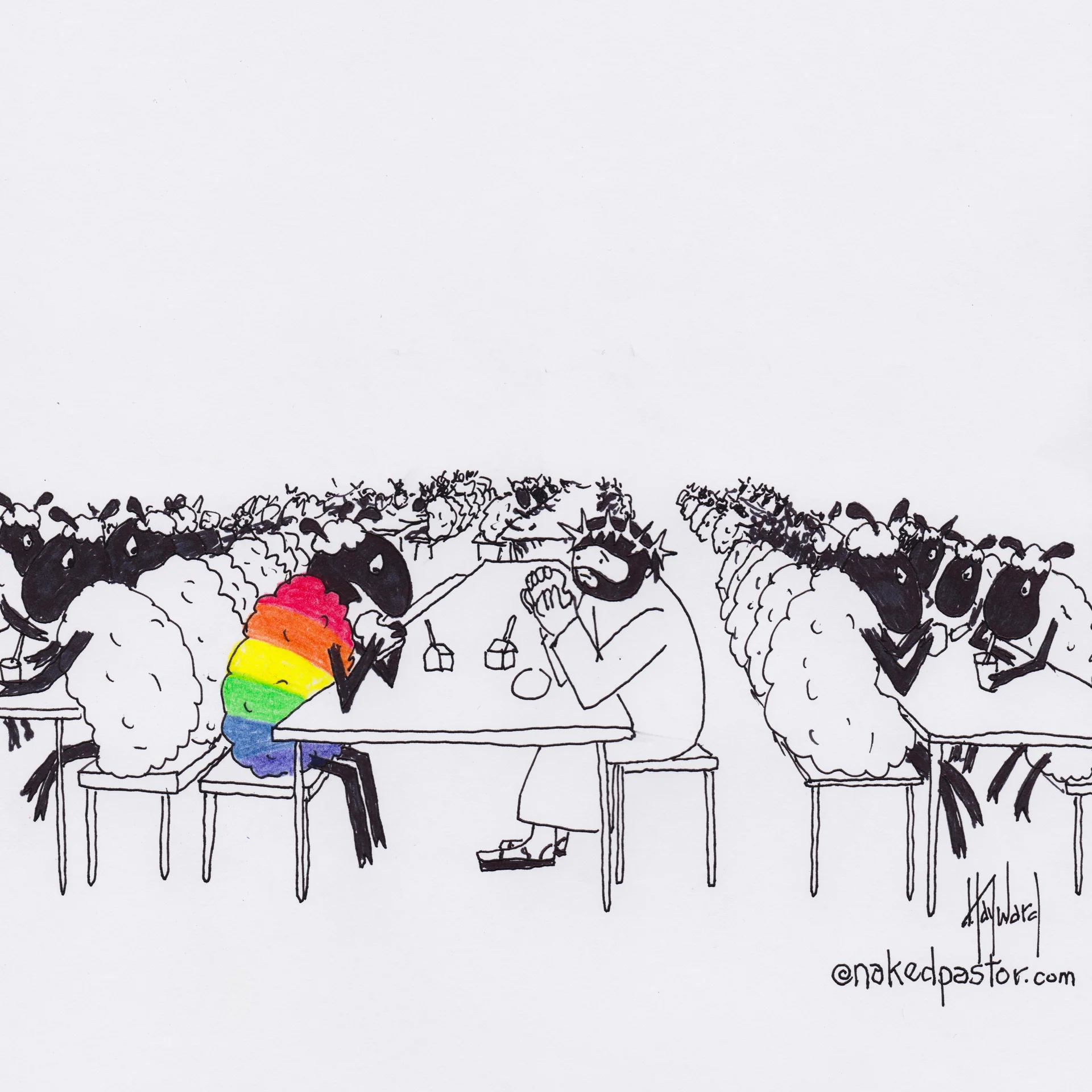
The paradox of Lent, of this season of fasting, is that our fast is to be a feast. We are called to lay down all the things the world tells us makes us good Christians - the piety, the memorized Bible verses, the loud prayers - and instead take up the acts of Jesus, his willingness to be among the outsiders, his drive to turn the world as we know it upside down. Lent is more than just a time to give something up; it’s a little vision of what the Kingdom of God is supposed to be.